
Four Clocks: Pakistan's Structural Trap and India's Window
Ceasefire, depletion, positioning, fear — Different clocks, different tolerances, one narrowing outcome.

April 12, 2026, Morning, Islamabad, Pakistan: The highest-level face-to-face meeting between the United States and Iran since the fall of the Shah produced a handshake, a marathon, and an empty communiqué. JD Vance boarded Air Force Two this morning with a final and best offer left unaccepted. Iran would not commit to forgoing a nuclear weapon. Tasnim called the American demands excessive.
At the Serena Hotel in Islamabad, two delegations had been sitting across from each other for twenty-one hours. The Americans brought nearly three hundred officials, led by the Vice President. The Iranians sent their Foreign Minister, their Parliamentary Speaker, their National Security Council Secretary, and their Central Bank Governor. Pakistan locked down its capital, deployed thousands of soldiers into the streets, and declared a two-day public holiday to clear the roads.
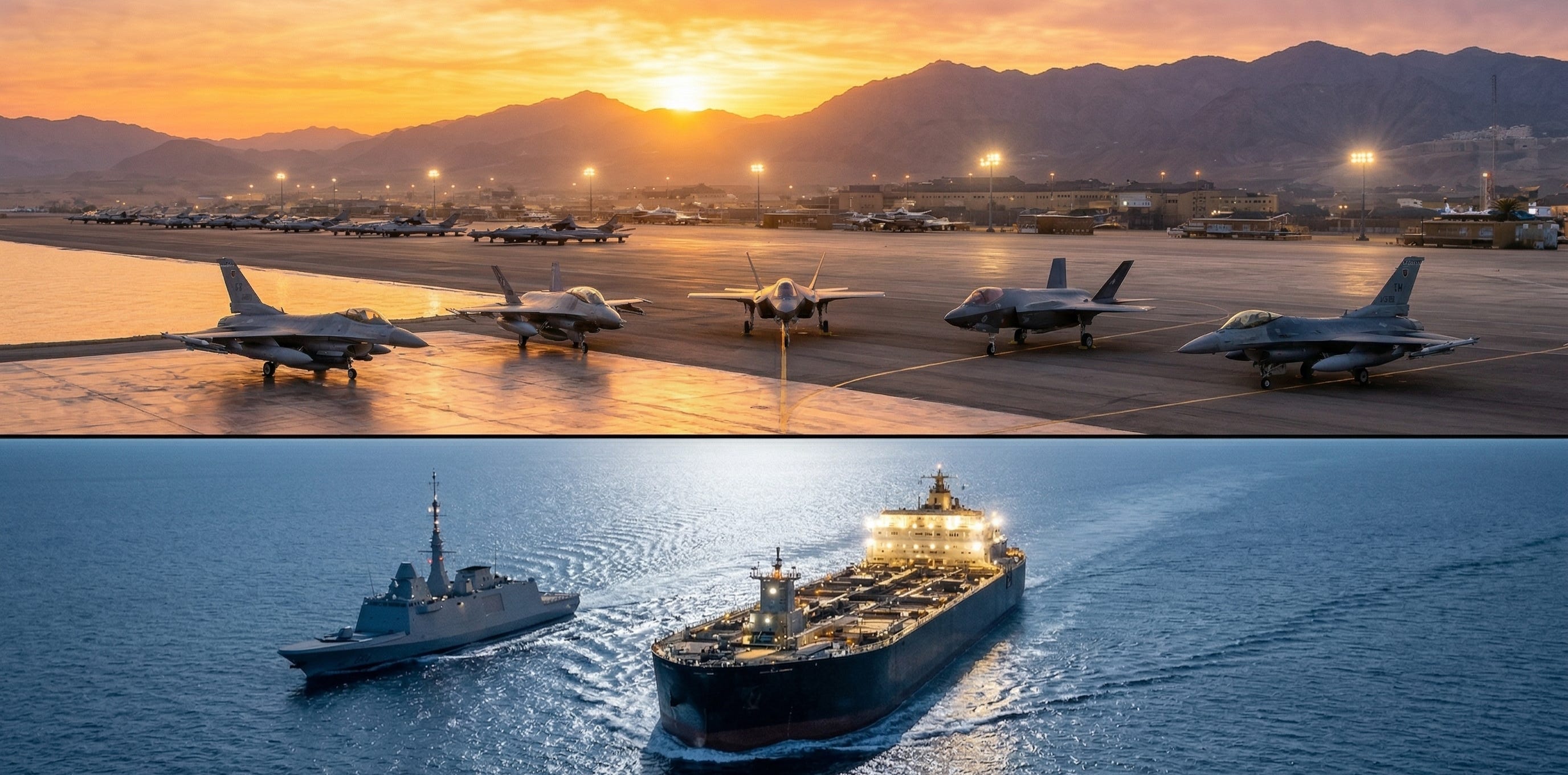
While the delegations talked through the night, the USS Frank E. Petersen and the USS Michael Murphy transited the Strait of Hormuz, the first American warships through since February 28. CENTCOM described the operation as mine clearance. Iran called it a ceasefire violation. The ceasefire expires April 22. No follow-up talks are scheduled.
Four clocks are running. Each keeps different time, each constrains a different actor.
Clock One: The Ceasefire Clock (10 Days)
The two-week ceasefire was announced April 7. It was broken within hours.
Israel launched “Operation Eternal Darkness” on April 8: over 100 strikes across Lebanon, at least 357 dead. Beirut called it Black Wednesday. Netanyahu said Lebanon was excluded from the ceasefire. Trump confirmed this. Pakistan, which brokered the deal, said Lebanon was included, and Iran and France agreed.
Israel needs the ceasefire to exclude Lebanon because inclusion removes its operational freedom against Hezbollah. Iran needs it to include Lebanon because its alliance system depends on it. The US endorses the ceasefire while permitting its largest violation.
Iran re-closed Hormuz traffic. Kuwait’s National Guard reported drone attacks during the ceasefire. Hezbollah struck Ashdod naval base. On April 9, Iran’s parliamentary speaker called the negotiating framework “unreasonable.”
Turkey added a variable on April 12. Erdogan declared that any attack on Lebanon or Iran would be considered an attack on Turkey, a NATO member drawing a red line against a NATO ally’s operational partner. If Hungary’s Orbán falls in upcoming elections, Israel loses its EU veto shield as well. The institutional barriers to European sanctions on Israel are thinning at the moment the military barriers to Israeli escalation dissolve.
Beneath the diplomatic surface, the GCC is scrambling. Saudi Arabia restored the East-West pipeline to full capacity: 7 million barrels per day to Yanbu, bypassing Hormuz, after an Iranian strike knocked out 600,000 bpd days earlier. The UAE activated the Abu Dhabi-Fujairah line at 1.8 million bpd. Both pipelines bypass the Strait. They depend on Drag Reducing Agents at maximum throughput, and they are vulnerable: Houthi missile reach for Yanbu (the March 18 drone near SAMREF confirmed this), Iranian missile range for Fujairah. The Leaking Bucket analysis from March identified four structural leaks in the Yanbu bypass (actuarial, physical, domestic consumption, fleet attrition). Maximum throughput accelerates all four.
The Islamabad talks were supposed to convert the ceasefire into substance. They failed. What happens April 22?
1. Extension. Another pause requiring a concession neither side has offered. Iran wants Lebanon included. The US wants nuclear commitments. Each extension without substance degrades the ceasefire as a framework.
2. Resumption. Strikes resume, the Strait re-closes fully, and oil spikes. Every structural variable points here.
3. Drift. Low-level strikes continue. Hormuz stays partially contested. Ambiguity becomes the steady state. This benefits Iran most, because Iran’s tolerance for sustained ambiguity exceeds every other actor’s.
Clock Two: Pakistan’s Depletion Clock (Weeks to Months)
On April 11, 13,000 Pakistani troops and 10 to 18 fighter jets arrived at King Abdulaziz Air Base in Saudi Arabia’s Eastern Province, joining the 10,000 already present. Total deployment stands at 23,000. Pakistan sent missile interceptors last month.
The Pakistan Air Force reaching Eastern Saudi Arabia while Pakistan markets itself as an honest broker between the US and Iran. The September 2025 “Mutual Defence Pact” is a euphemism for a mercenary arrangement in which Saudis pay through deferred oil, credit facilities, and remittance permissions, a pattern that predates the modern nation-state. Feudal European princely states exhibited identical relationships before the 18th-century rise of sovereign armies. MBS rents Pakistani bodies. He does not build Pakistani institutions.
Pakistan’s genuine defence challenge lies on its eastern border. In a conflict with India, the only Saudi help available is goodwill. Saudi Arabia carries too much trade and energy exposure to India (largest buyer of Saudi crude, millions of Indian workers in the Gulf) to intervene on Pakistan’s behalf. The pact’s obligation runs one direction.
Pakistan has lost sovereignty incrementally because its economy cannot sustain independence. IMF, World Bank, ADB, UK Aid, the EU’s GSP-plus have maintained a financial drip preventing political meltdown. In exchange, the regime gives away sovereignty without receiving anything substantial for its people. The Islamabad talks were spectacle in the tradition of Roman games in the Coliseum: entertaining for the audience, irrelevant to the structural condition of the fighters.
Pakistan’s elite chose to serve as Trump’s intermediary. PAF jets landing in Eastern Saudi Arabia and US warships entering the Strait while Iranian leaders negotiated with JD Vance in the same city raise questions Pakistan’s leadership cannot answer.
Four vulnerabilities run simultaneously.
1. Energy reserves cover 7 to 11 days of crude demand. Petrol rose Rs 55 per litre in March. The government declared 10-day emergency holidays, imposed market closures, restricted weddings.
2. Debt servicing consumes 48% of federal revenue. Growth at 3%, barely above population growth. The IMF standby arrangement is at risk. Saudi payments sustain the troop deployment only as long as the crisis continues, and the crisis is what destroys the economy.
3. Multi-front military exposure. Afghanistan: artillery along the Durand Line, BLA attacks on Gwadar and Turbat, Taliban claims of 64 captured border posts. India: Sindoor 2.0 confirmed underway, preparations described as “far more extensive” than May 2025. Defence Minister Rajnath Singh warned on April 2 of an “unprecedented and decisive” reaction to any misadventure during West Asian unrest.
4. The mediation produced headlines, not outcomes. Bloomberg hailed Islamabad as peacemaker. Senator Sherry Rehman celebrated “rising global diplomatic stature.” The centrepiece was 21 hours with no result. Pakistan’s leverage existed in the gap between war and peace. That gap is narrowing. The crisis is consuming Pakistan faster than anyone else at the table.
Clock Three: India’s Positioning Clock (Months)
India has held every front simultaneously. Consider the relationships it is maintaining as of April 12.
Iran lets Indian tankers through the Strait of Hormuz while bombing Saudi refineries and launching drones at Kuwait. Nine India-flagged vessels have transited during the conflict, all energy carriers. Iran’s IRGC guided them through alternative routes near Larak Island, never boarded them, charged nothing. Four Indian warships escorted one tanker for 20 hours into the Arabian Sea.
Russia’s First Deputy PM Manturov visited New Delhi on April 2, reaffirming capacity to increase oil, LNG, and fertilizer supplies. Russia boosted fertilizer shipments to India by 40% through 2025 and became India’s largest fertilizer supplier at 6.5 million tonnes. A joint urea production project is under development. Indian embassies across 20 nations have been mobilised to secure supply chains for the Kharif season. India locked in 2.5 million tonnes from Morocco, opened channels with Belarus, Indonesia, and Algeria. Gas supply to domestic fertilizer plants has been raised to 90% of demand using LNG sourced from the US, Australia, and Russia. While China restricts fertilizer exports and the Middle East burns, India’s fields will be planted.
The US is supplying LPG from the Gulf Coast under India’s first structured contract: 2.2 million metric tons for 2026, 10% of annual imports. By mid-March, Middle Eastern LPG had dropped to 34% of India’s imports as alternative supplies surged. The government cut excise duty on petrol from Rs 13 to Rs 3, on diesel from Rs 10 to zero, and absorbed over Rs 40,000 crore in LPG subsidies. Retail petrol and diesel prices have held unchanged since May 2022. Domestic LPG stabilised by late March. The March crisis peaked and was contained.
The UAE maintains energy and investment ties with India through the disruption. Israel and the US remain defence and technology partners. India chairs BRICS this year, with Iran as a member. At the April 2 London meeting on the Strait’s future, India emphasised cargo flows and avoided attribution. On joining a US-led Hormuz coalition: “not yet discussed in a bilateral setting.”
Pakistan garrisons the kingdom under fire. India escorts cooking gas through the waters of the country firing.
On the military track, Army Chief General Dwivedi called Sindoor a “defining case study” of multi-domain operations: “no single domain decided the operation.” He called for progression from “domain jointness” to “domain integration and fusion.” India’s cost for the four-day conflict: $407.75 million. Pakistan’s: $1.5 billion. India’s GDP is ten times Pakistan’s.
Three axes converge.
1. Every Hormuz escort rehearses the Indian Ocean security provider role. If a 30-nation coalition forms (the UK announced the plan April 10), India enters with demonstrated capability. Pakistan’s navy defends a patron under a bilateral pact. India’s navy defends global shipping under self-directed operations.
2. Sindoor 2.0 preparations continue: the Western Command’s public statements, the Indus Waters Treaty suspension, Pakistani High Commission staff reduced to 30, persona non grata declarations. Sequential moves on a visible escalation ladder. Each week that Pakistan’s military attention fragments across Saudi Arabia, Afghanistan, and the mediation spectacle is a week India’s relative advantage on the western front increases.
3. The March energy crisis forced diversification that now serves as structural insulation. US LPG contracts in place. Russian fertilizer pipeline secured. Excise duties already cut. If the Hormuz crisis recurs after April 22, India enters the second round with supply chains reorganised. Pakistan enters with 7 to 11 days of crude reserves.
Clock Four: The Psychology of Fear
Iranian civilians have lived under American and Israeli military threat since the 1980s. The Iran-Iraq war killed hundreds of thousands. Sanctions compressed living standards for decades. When the April 7 ceasefire was announced, Tehran crowds waved flags. They celebrated survival. That is a fundamentally different psychological orientation from Tel Aviv or Dubai. The regime can afford to let the Islamabad talks fail. It can wait. Trump cannot.
Israeli civilians have absorbed 89-plus waves of missile and drone attacks since February 28. Air defences have held. Israeli society is built for short, decisive wars: six days, eighteen days, four days. A 44-day campaign with no endpoint erodes the social contract. Israel’s launch of “Operation Eternal Darkness” on the day of the ceasefire, 357 killed, 100 strikes, is escalation as anxiety management. The behaviour of a military establishment imposing certainty on a situation generating ambiguity.
GCC populations are the most fear-vulnerable actors. The UAE’s strategic model requires civilian confidence. One attack on an aluminium plant during the conflict significantly softened Abu Dhabi’s bluster. For states like the UAE, where the economic engine is fueled by expatriate capital and global tourism. Security is a foundational commodity. A single breach of this shield and expatriates leave, insurance reprices. Tourism does not return on ceasefire day. It returns, if it returns slowly, over years.
Pakistani civilians can absorb fear. They cannot absorb empty fuel stations, Rs 378 petrol, and 48% debt servicing simultaneously with troops abroad. The breaking point is the wallet.
Indian civilians have the deepest buffer. Pre-liberalisation scarcity is within living memory. The March energy disruption was contained within weeks: US LPG contracts, Russian fertilizer pipelines, excise cuts, Rs 40,000 crore in government subsidies. Retail fuel prices have held since May 2022. The ruling party has staked its identity on strength. The domestic political cost of inaction against Pakistan after another terror incident exceeds the cost of military action. Sindoor demonstrated that India can strike precisely and absorb the retaliatory cost. The fear threshold for war with Pakistan is higher in India than the corresponding threshold in Pakistan. India’s challenge is to manage the “Window of Opportunity” without triggering a systemic overextension that could jeopardise its internal economic buffer given the risk of a protracted entanglement in a collapsing neighbour’s internal volatility.
The Financial Architecture Beneath the War
Fog One (incumbent): City of London clearing, Lloyd’s insurance, correspondent banking, Russian shadow logistics. The system that priced Gulf risk and denominated oil in dollars through London intermediation. The Iran war degrades it in real time. Lloyd’s repriced. P&I clubs withdrew. The shadow fleet (18% of tanker capacity by March) expands as the legitimate market contracts. Saudi Arabia uses grey tonnage for compromised cargoes.
Fog Two (emergent): Fortress Americas. GENIUS Act stablecoin rails (signed July 2025). Western Hemisphere energy capture (Venezuela at 800,000 bpd, targeting 2.5 million). Sovereign maritime insurance. Trump’s project: use the Iran war to destroy Fog One’s monopoly and replace it with American-controlled digital settlement and energy infrastructure. The political clock is the 2026 midterms. The strategy is behind schedule.
Fog Three (patient): China’s parallel architecture. CIPS, digital yuan, Project mBridge, bilateral commodity agreements with Gulf producers. Every month of Hormuz disruption accelerates CIPS adoption. Every failed negotiation makes the dollar look less reliable.
China is no longer building quietly. US intelligence indicates Beijing is preparing to supply Iran with MANPADS in weeks: shoulder-fired missiles designed to kill American pilots. China was careful with Russia in Ukraine, supplying drones and parts while keeping distance from full weapons systems in a theatre with no American troops. Arming Iran while US forces are engaged is a different order of escalation, one that only makes sense if Beijing considers its position unassailable.
On Sunday, Abu Dhabi’s Crown Prince begins an official visit to China. The UAE is hedging toward Chinese security architecture while its neighbour Saudi Arabia hosts American-aligned Pakistani fighter jets. The Gulf’s competing patron arrangements, compressed into a space smaller than Mumbai-to-Bangalore, are fragmenting in real time.
The dollar reflects this fragmentation. It now represents approximately 46% of global FX and gold reserves, the lowest in at least 26 years and down 15 points since 2017. Excluding gold, it makes up 57% of reserve currencies, the lowest since 1994. The last time the dollar fell below 50% of global reserves was 1990-1991, a period of elevated inflation, recession, and crisis of confidence in the American economy. The Iran war accelerates every trend driving that decline.
The deeper substrate: oil as exported radicalisation.
Petrodollar wealth gave Gulf states leverage they used to export fundamentalism for decades: Wahhabi seminary funding from South Asia to Southeast Asia, madrasah networks from Pakistan to Indonesia, terror financing laundered through charitable foundations. The radicalisation they birthed domestically was shipped abroad as an export product.
The current war has these states fighting for survival. The disruption to GCC unity is structurally beneficial for developing nations that absorbed that export for generations. The addition of the US as energy supplier (shale, LNG, Venezuelan ramp-up) fragments the market further. More suppliers, less individual leverage. The monopoly premium that funded the radicalisation export is eroding.
For those tempted toward sympathy for GCC humanitarian credentials: their behaviour during Covid (minimal assistance, migrant workers confined in labour camps) and during the European refugee crisis (near-zero resettlement, leverage extracted from the flow) is the record. Let these states keep their fundamentalism within their own borders. The war, by damaging the concentrated petro-leverage that funded the export, performs a structural service that decades of counter-terrorism cooperation never achieved.
The current conflict acts as a brutal catalyst for the decoupling of global energy from a singular, cartelised geography. While the immediate destruction of GCC infrastructure represents a catastrophic volatility event for developing markets, it aslo serves as a violent corrective to the decade-long concentration of petro-leverage. This forced diversification also fundamentally de-finances the institutional pipelines through which regional radicalisation was previously exported shamelessly by the GCC block, compelling a pivot toward a more fragmented, and perhaps more resilient, energy commons.
India routes through all three fogs simultaneously: Hormuz escorts and US LPG contracts through Fog Two infrastructure, Chabahar and Russian fertilizer pipelines through Fog Three connectivity, BRICS chairmanship as Fog Three diplomatic cover, and US-Israel defence partnerships as Fog Two alignment. Iran lets Indian ships through. Russia increases fertilizer supply by 40% while restricting exports elsewhere. The US supplies LPG from Texas. The UAE maintains investment ties. China trades normally. India is useful to every architecture simultaneously, which is why every architecture keeps the channel open.
Pakistan routes through one fog. Saudi Arabia’s security budget. American alliance system infrastructure with no independent connectivity to any alternative. When the patron’s fog machine breaks, Pakistan has no settlement rail, no energy source, no insurance architecture, no commodity basin. It has soldiers.
The Convergence
The four clocks interact. The ceasefire clock (10 days) determines whether Pakistan’s garrison in Saudi Arabia becomes combatant. The depletion clock (weeks) determines whether Pakistan’s economy survives long enough for a second round. The positioning clock (months) determines whether India’s advantage on the western front becomes decisive. The psychology clock (continuous) determines which populations force their governments toward escalation or accommodation.
If the ceasefire expires without extension, the interaction accelerates. Iran resumes full Hormuz closure. Pakistan’s garrison becomes an active target. India’s escort operations resume under higher threat. Sindoor 2.0 preparations continue against a Pakistan whose bandwidth is consumed by the Gulf.
The US Intelligence Community’s Annual Threat Assessment: “conditions exist for terrorist actors to continue to create catalysts for crises.” Georgetown analysts expect a repeat of the May 2025 crisis. The trigger is a question of timing.
When it comes, Pakistan’s strategic position will be worse on every axis: troops abroad, an active western front, single-digit energy reserves, an economy at 48% debt servicing, and a nuclear bluff called publicly by Indian generals. The KSA-Pakistan pact technically mandates Saudi assistance in a Pakistan-India conflict, but it will not be honoured. Pakistan by inserting itself into a Middle Eastern war for financial aid is mortgaging its army and its future to a geography that is not its own. The Middle East is not a natural theatre for a nation born in the Indian subcontinent. The mortgage will not be redeemed.
India’s position will be better on every axis: nine successful Hormuz transits, a destroyer fleet operationally tested, Sindoor lessons integrated into multi-domain doctrine, defence exports at Rs 38,500 crore, the Indus Waters Treaty suspended, and diplomatic relationships with all belligerents preserved.
The May-June 2025 flowchart: Path A. Fight during Maṅgala Mahādaśā. Major damage to both sides. Pakistan neutralised for three to four decades. Economy regresses a decade. Slow growth. In Rāhu Daśā, India becomes a genuine great power.
The March 2026 Medinī Jyotiṣa analysis: Saturn-Neptune conjunction at marks a civilisational inflection. The Pisces stellium is the year’s highest-intensity alignment. India’s Mars-Rāhu Antardaśā creates the classical war signature.
Geopolitical analysis and Jyotiṣa converge on the same window. April through June and then August through December 2026.
The Edge Case That Changes Everything
Vance identified Iran’s nuclear programme as the sticking point. Iran’s enrichment facilities have been struck, but the knowledge base remains intact. After the June 2025 Twelve-Day War, Iran’s Parliament voted for the Atomic Energy Organisation to end all IAEA cooperation. A no-deal outcome combined with continued military pressure creates the strongest incentive Iran has ever had to pursue a demonstrable nuclear capability.
If Iran demonstrates a weapon, Saudi Arabia accelerates its own programme (Chinese-assisted infrastructure already under construction). Turkey revisits its nuclear options. Pakistan’s nuclear posture shifts from bilateral deterrent against India to rentable regional asset. India’s window for decisive western-front action narrows.
If Iran goes nuclear, Pakistan becomes Saudi Arabia’s nuclear guarantor. The garrison at King Abdulaziz becomes an extended deterrence arrangement. India’s calculus on Sindoor 2.0 becomes time-bound: act before the proliferation cascade hardens the regional order.
Consider the geography. Dubai to Riyadh: 1,100 km. Dubai to Qatar: 900 km. Dubai to Oman: 500 km. Mumbai to Ahmedabad: 600 km. Mumbai to Bangalore: 900 km. The entire GCC theatre fits within the geographic footprint of western India. Multiple competing security architectures layered onto a space smaller than a single Indian state’s span. If Iran, in extremis, targets GCC oil infrastructure, the destruction radius covers the entire basin.
Short-term pain, long-term benefit. For developing nations, the destruction of concentrated petro-leverage is painful now, but it forces diversification, weakens the supplier monopoly that radicalised three continents, and creates a world where energy security depends on competing sources rather than a single cartelised basin.
Whether specific resources carry an innate nature in Medinī Jyotiṣa, whether oil-rich geographies bear a particular graha signature (petroleum maps to Śani and Rāhu: subterranean, dark, transformative, associated with Mleccha lands in classical texts), and why these geographies are perpetually warring, deserves its own treatment. A future piece will cover it in detail.
NOTE - Some part of this analysis is a direct development from discussions with my good friend, Himja Parekh. Based of Mumbai, she is the finest geopolitical analysts I know. You may follow her here.
Excellent analysis!
As you anticipate - China may decide this is the right opportunity to develop an alternative settlement system to the petrodollar-Swift, however it may be a grave error as the US will prosecute, even at the real risk of over-extending and exhausting itself.
It may end up with the US retaining control of the Americas, Atlantic, and most of the Pacific, but conceding Asia to India (or China if it survives the US onslaught intact - I doubt it will).
India, by holding it's line may stand to benefit the most - however it must act decisively to secure it's borders and settle internal strife. We hope.
Very well built up n layered argument. Thank you